
Nashville’s retail, hospitality, healthcare, and entertainment scenes are booming—and that means more transactions, more channels, and higher expectations from locals and 16–17 million annual visitors.
If you run a shop, venue, food truck, clinic, or service business, the payment processing trends Nashville merchants should watch in 2025 revolve around instant payments, contactless and Tap to Pay, compliance (PCI DSS v4.0), lower-friction online checkouts, smarter fraud tools, local rules around surcharging and taxes, and a fresh wave of privacy laws.
This guide breaks it all down with practical steps tailored to Music City. Throughout, we’ll keep the payment processing trends Nashville merchants keyword front-and-center so you can apply each trend directly to your business.
Nashville’s visitor spend hit record highs in 2024, and population growth continues to outpace national averages—both powerful signals that now is the time to modernize payments for speed, security, and guest experience.
1) Instant Payments Move Mainstage: FedNow Adoption and What It Means for Cash Flow

One of the most consequential payment processing trends Nashville merchants should watch is the rise of instant payments—especially via the Federal Reserve’s FedNow Service. After launching in July 2023, FedNow reached two-year milestones in 2025, with rapid adoption and hundreds of participating financial institutions (primarily small and mid-sized).
For merchants, the headline is simple: faster settlement and better cash flow, with potential use cases in payouts, refunds, supplier payments, and B2B collections. If your bank or processor supports FedNow-enabled rails (or RTP), you can reduce refund lag, speed up vendor payments, and improve working capital.
Ask your bank whether they support instant disbursements, request-for-payment, and payment confirmation APIs. These are the building blocks for new customer experiences (think instant deposits for consignment, same-day vendor pays for events, or just-in-time inventory restocks).
For Nashville restaurants, venues, and event operators, instant payouts can cut settlement friction after big weekends or festivals. Even if you’re not sending or receiving FedNow transactions at the register, B2B/AP and payouts flowing on instant rails can stabilize weekly cash flows and reduce reliance on short-term credit.
Start by confirming FedNow participation with your bank, mapping high-volume disbursement flows (tips, refunds, vendor payments), and piloting a limited use case.
As this payment processing trend Nashville merchants explore becomes mainstream, you’ll be positioned to offer faster guest refunds and tighter cash management—advantages your competitors will notice.
2) Contactless, NFC, and Tap to Pay on iPhone Become the Default—No Extra Hardware Required
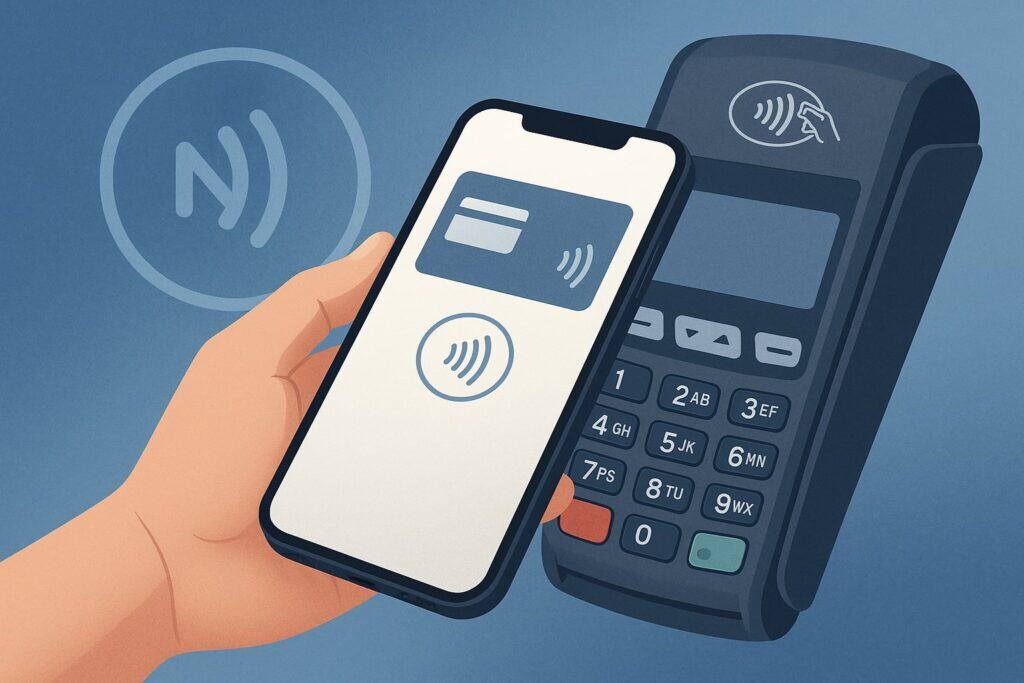
Another must-watch payment processing trend Nashville merchants is the normalization of tap-to-pay across cards, phones, and wearables—especially Tap to Pay on iPhone, which lets you accept contactless payments on a compatible iPhone without any extra hardware when used with supported PSPs like Stripe (and others listed by Apple).
That matters in a city where mobile businesses, pop-ups, farmer’s markets, food trucks, and festivals are part of daily life. For seasonal volume spikes around events, you can spin up extra checkout points quickly with staff iPhones, reducing lines and improving guest experience without buying more terminals.
Consumer behavior is already there. Contactless growth remains strong, North American NFC penetration keeps climbing, and new NFC standards (Release 15) improve tap reliability by increasing effective range—reducing awkward retries at the counter.
Pair that with Nashville’s record tourism spend and you get a clear mandate: make tap-to-pay effortless. Action items: enable contactless on every terminal, add Tap to Pay on iPhone for overflow or off-premise sales, and make sure your POS supports Apple Pay/Google Pay plus network tokenization so repeat customers see fewer declines.
This payment processing trend Nashville merchants adopt first will feel invisible to guests—and that’s the point.
3) Online Checkout Evolves: Tokenization, Click to Pay, Passkeys, and Fewer Form Fields
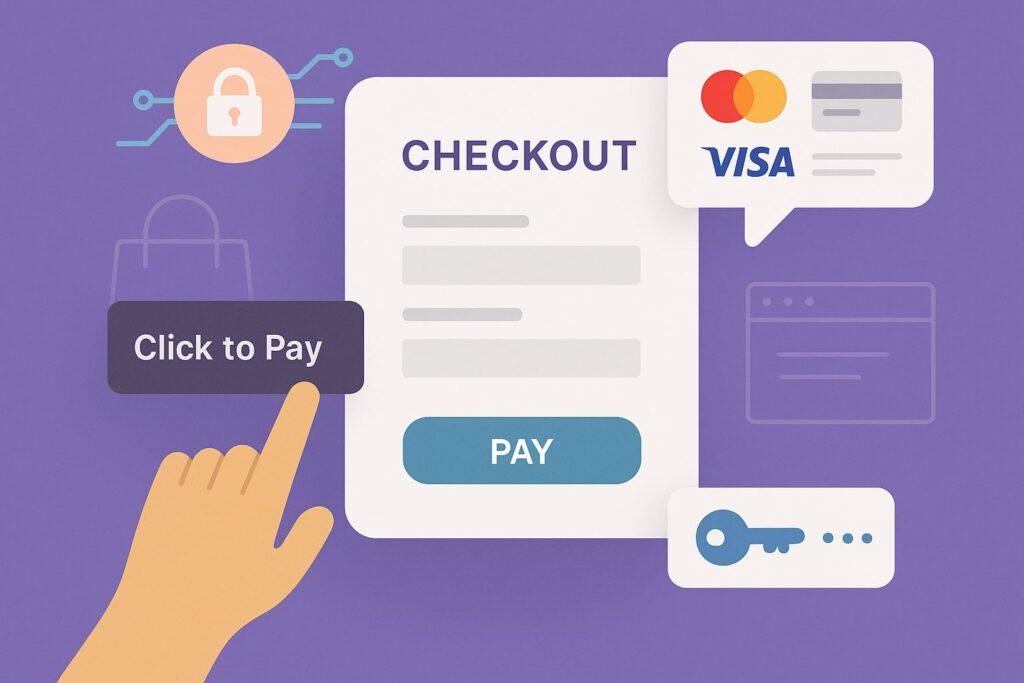
Cart abandonment is a silent killer, and 2025’s payment processing trends Nashville merchants should watch online are all about frictionless checkout. Networks and PSPs are moving toward tokenized, one-click experiences where shoppers don’t key card numbers, and authentication leans on biometrics and passkeys.
Mastercard’s roadmap targets a future where manual card entry disappears in favor of network tokens + Click to Pay + biometric auth. For local merchants with eCommerce (merch, gift cards, ticketing, subscriptions), tokenization also boosts authorization rates and account updater resilience when plastic changes.
Ask your gateway about network tokenization, Click to Pay enrollment, and passkey support in your checkout.
Practical steps to ride this payment processing trend Nashville merchants can execute now: (1) turn on Click to Pay in your gateway; (2) use device wallets (Apple Pay / Google Pay) on web and in-app; (3) enable network tokens for vaulted cards; (4) keep checkout to one page, deferring non-essential fields; and (5) monitor approval rate by BIN to spot bank-specific friction.
Over time, your fraud, conversion, and customer LTV all improve when you stop asking buyers to retype 16 digits and OTPs at midnight.
4) Smarter Fraud Defense: EMV® 3-D Secure 2.3.1, CE 3.0 for Chargebacks, and Data-Rich Disputes
Card-not-present fraud and friendly fraud keep rising with digital volumes, which makes fraud-aware checkout one of the most important payment processing trends Nashville merchants should adopt. Three levers stand out:
(a) EMV® 3-D Secure 2.3.1: The latest 3DS iterations improve signal sharing and challenge flows, helping you authenticate good customers invisibly while stepping up risky ones. Confirm your provider supports 3DS 2.3.1 across web and app, align exemptions carefully, and monitor friction rates.
(b) Visa Compelling Evidence 3.0 (CE3.0): Visa’s CE3.0 substantially changes how merchants fight 10.4 (CNP fraud) disputes by letting you use a cardholder’s prior, undisputed transactions with shared identifiers. Many PSPs now automate evidence packaging; some flows even pre-qualify disputes to be blocked.
Train your team on which historical data points qualify and ensure your order management system stores them. Recent network updates expanded automated qualification, making CE3.0 one of the most consequential payment processing trends Nashville merchants can leverage to reduce loss.
(c) Network tokenization + risk tools: Tokens, issuer risk scoring, and behavioral biometrics reduce false declines and fraud hand-in-hand. Nashville eCommerce sellers should test token vs.
PAN approval rates, measure impact on chargebacks, and enable the network’s enhanced dispute APIs where available. Together, these payment processing trends minimize noise while keeping honest customers moving.
5) Compliance Deadlines You Can’t Miss: PCI DSS v4.0/4.0.1 in 2025 (and What Changed for SAQ A)
Compliance isn’t glamorous, but it’s one of the most urgent payment processing trends Nashville merchants must act on. PCI DSS v4.0 retired 3.2.1 in 2024 and turned dozens of “best practices” into mandatory requirements by March 31, 2025 (v4.0.1).
If you validate via SAQ A (typical for hosted payment pages), you’ll see changed reporting for several controls (including 6.4.3, 11.6.1, 12.3.1), plus ongoing obligations to protect your payment page from skimming and script injection.
Don’t assume “hosted” means “hands-off”—content integrity and change control are now front-and-center. Build a simple cadence: inventory third-party scripts, pin and monitor them, use CSP/reporting, and keep a paper trail. It’s a tangible way to reduce web-skimming risk and pass your SAQ.
If your scope is larger (SAQ D or a full ROC), prioritize future-dated items that became effective in 2025: phishing resistance, multi-factor improvements, script monitoring, vulnerability/risk processes, and customized approaches documentation.
Treat PCI as a practical security framework: fewer incidents equals fewer disputes and better uptime. This is one payment processing trend Nashville merchants can control with a checklist and a calendar reminder.
6) Tennessee-Specific Rules: TIPA Privacy Law, Data Breach Notification, Sales Tax, and Surcharging
State rules shape how payment processing trends Nashville merchants are implemented. In 2025, Tennessee’s Tennessee Information Protection Act (TIPA) took effect (effective July 1, 2025), creating consumer privacy rights and obligations for certain businesses processing Tennesseans’ personal data.
Even if you’re below thresholds, it’s smart to align with key principles (transparency, opt-outs, data minimization), because customer expectations rarely stop at legal boundaries. The Attorney General has issued guidance for businesses—review it, update your privacy notice, and make sure vendors (including your PSP) meet your standards.
Tennessee also has data breach notification requirements—if you store personal information and experience a breach, timely notice is required. Work with counsel on your incident response playbook and confirm how your PSP/hosted-payments provider notifies you. On tax, the state’s general sales tax rate is 7% (local add-ons apply in Davidson County).
Finally, credit card surcharging is permitted in Tennessee subject to disclosure rules and network brand caps—never surcharge debit. If you consider surcharging to manage costs, follow clear signage and receipt disclosures; mislabeling a surcharge as a “cash discount” can invite complaints.
This cluster of local details influences how payment processing trends Nashville merchants deploy day-to-day.
7) Interchange & Litigation Watch: What the Big Settlements Mean for Small Businesses
Several long-running merchant lawsuits reached important milestones, which is why legal developments belong on any list of payment processing trends Nashville merchants should track.
A 2019 settlement for past damages (acceptance from 2004–2019) progressed through claims, while additional settlements in 2025 addressed other allegations (e.g., chip-liability/chargeback rule changes) and headlines continued about swipe-fee rules and caps.
The practical takeaway: settlement dollars (if any) are one-time; ongoing cost control still depends on pricing model, interchange optimization, and network rules compliance (like proper surcharging, Level 2/3 data, and avoiding non-qualified downgrades).
Keep your processor honest with a fee audit, and pair that with operational tweaks (capture timing, tokenization, and card-on-file updates) to measurably reduce total cost of acceptance.
For payment processing trends Nashville merchants focused on margins, this is a reminder to review: (1) your statement line items (assessment, acquirer fees, misc. adders), (2) downgrade reasons, (3) chargeback ratios, and (4) authorization rates by card brand and wallet. Small process changes can save far more than the best headline-level settlement.
8) Nashville’s Demand Curve: Record Tourism, Population Growth, and Operations Planning
Why invest now? Because local demand is strong. Davidson County visitor spending set record highs in 2024 and the metro’s population grew roughly 6.4% since 2020—bringing more transactions, more first-time customers, and more out-of-state cards.
For brick-and-mortar, that means staffing for peaks, enabling Tap to Pay for overflow, deploying QR pay for self-serve bars/merch, and using order-ahead to flatten lines. For online, it means ensuring your store, ticketing, or invoicing checkout is tokenized and mobile-first.
These are the payment processing trends Nashville merchants can apply immediately to turn growth into revenue with less friction and no extra terminals.
If your business sells to tourists, support international wallets and chip-and-signature fallbacks gracefully, keep multi-currency pricing in mind if your PSP offers it, and send digital receipts that capture loyalty sign-up in one tap. The more Nashville grows, the more each small optimization compounds across busy weekends and events.
9) Practical Playbook: How to Act on These Payment Processing Trends in Nashville
To operationalize the payment processing trends Nashville merchants are watching, follow this 10-step playbook:
- Turn on contactless everywhere (terminals + Tap to Pay on iPhone), then test Apple Pay/Google Pay and cards. Train staff say, “You can just tap.”
- Add instant payouts for refunds/tips/vendor pay if your bank supports FedNow or equivalent. Pilot with one workflow (e.g., daily tips).
- Tokenize online checkouts and enable Click to Pay. Compare approval rates PAN vs. network token, and add passkeys where supported.
- Implement 3DS 2.3.1 with a risk-based policy; watch friction and approval KPIs weekly.
- Leverage CE3.0: store the right identifiers and let your PSP auto-assemble evidence where possible. Train your chargeback agent(s).
- Finish PCI v4.0 tasks (script integrity, MFA, phishing defenses). Update your SAQ A/D by the 2025 timeline and document controls.
- Update privacy & breach policies for Tennessee TIPA and notification rules; align vendors and your website privacy notice.
- If surcharging, follow brand caps, disclose clearly, and never surcharge debit. Validate receipts and signage.
- Run a fee audit: spot downgrades, misc. adders, PCI non-compliance fees, and optimize Level 2/3 data on B2B cards.
- Plan for peaks: mobile lanes via Tap to Pay on iPhone, QR menus, and order-ahead to reduce queues during events.
10) Trend Spotlight for 2025–2026: What’s Next on the Horizon
Looking slightly ahead, a few payment processing trends Nashville merchants should keep on the radar:
- NFC improvements (Release 15) promising fewer mis-taps and smoother wearable payments—useful at crowded bars and merch lines.
- Broader instant-payment use cases (e.g., account-to-account bill pay, deposit alternatives). Keep asking your bank what’s live now.
- Checkout without card numbers: The industry’s push toward fully tokenized eCommerce with Click to Pay + biometrics continues to accelerate.
- Ongoing interchange and settlement updates: Useful to track, but the reliable savings still come from smart routing, data quality, and clean operations.
These developments underline a shared goal: less friction, more security, faster money movement. That’s the heart of the payment processing trends Nashville merchants can use to win repeat business.
FAQs
Q1) Is Tap to Pay on iPhone secure enough for my shop or venue?
Answer: Yes—transactions are encrypted and processed by a supported PSP. You still follow PCI and brand rules, but there’s no extra hardware to manage. It’s ideal for pop-ups, peak lines, deliveries, and tableside.
Ensure your PSP is listed as a supported provider and that your devices are compatible. This is one of the fastest wins among payment processing trends Nashville merchants can deploy today.
Q2) What’s the real business case for FedNow if my POS already batches the next day?
Answer: Instant rails shine for refunds, payouts, and supplier payments—anywhere settlement lag hurts customer satisfaction or cash flow.
If you process lots of returns after events, instant refunds can reduce support tickets and chargeback risk, and same-day vendor payments can strengthen supplier relationships. Ask your bank which FedNow features they’ve enabled.
Q3) Do I have to use 3-D Secure (3DS) for every online sale?
Answer: No—modern 3DS (2.3.1) is risk-based. Your PSP can silently authenticate most good customers while stepping up risky ones. Done well, it reduces fraud without crushing conversion—key for eCommerce tied to Nashville’s tourism and events.
Q4) What changed with PCI in 2025 for small merchants on hosted checkouts (SAQ A)?
Answer: PCI DSS v4.0/4.0.1 made several controls reportable by March 31, 2025, including around script integrity and change management even for hosted pages.
Review the updated SAQ A and ensure your website meets content-integrity expectations (e.g., CSP, script monitoring). This is a critical payment processing trend Nashville merchants can’t ignore.
Q5) Can I add a surcharge to credit card payments in Tennessee?
Answer: Tennessee allows credit card surcharging with clear disclosures and within brand caps; debit surcharging is prohibited. If you go this route, train your staff, update signage/receipts, and verify network rules with your acquirer. Consider customer sentiment before rolling it out in tourist-heavy corridors.
Q6) What is TIPA and does it affect my boutique or cafe?
Answer: The Tennessee Information Protection Act (TIPA) is the state’s privacy law effective July 1, 2025. It establishes consumer rights and business obligations for certain entities.
Even if you’re not squarely in scope, aligning your privacy notice, opt-out links, and vendor contracts with TIPA best practices is smart risk management and good customer experience.
Q7) Do settlements about swipe fees mean my processing costs will fall automatically?
Answer: Not necessarily. Settlements can be slow and limited in scope. Your day-to-day costs still depend on pricing model, interchange qualifications, routing, and operational hygiene (capture timing, tokenization, Level 2/3 data, etc.). Keep auditing your statements for non-compliance fees and avoid downgrades.
Conclusion
The payment processing trends Nashville merchants should watch in 2025 all point to one strategy: reduce friction and risk while speeding up money movement. Start with fast wins—Tap to Pay on iPhone, Apple Pay/Google Pay online, and Click to Pay—then harden your stack with 3DS 2.3.1, CE3.0, and PCI v4.0/4.0.1 controls.
Tighten privacy and breach readiness for TIPA, and if you explore surcharging, do it by the book with clear disclosures. Nashville’s growth—record tourism spend and a surging population—means more customers, more transactions, and more chances to win loyalty with a checkout that “just works.”
The merchants who align quickest with these payment processing trends Nashville merchants are already using will see shorter lines, fewer chargebacks, higher approvals, and steadier cash flow. That’s how Music City turns payment plumbing into a competitive edge.