By alphacardprocess November 14, 2025
Nashville’s small businesses, restaurants, boutiques, venues, and service providers all share one reality: customers expect to “insert or tap” a card and move on. EMV compliance for Nashville businesses is no longer a nice-to-have—it’s a core risk-control requirement that directly affects fraud exposure, dispute outcomes, and customer trust.
In 2025, card brands, EMVCo specifications, and PCI DSS v4.0 expectations align to push every Music City merchant toward secure, chip-first and tap-to-pay acceptance. This guide breaks down what EMV compliance means today, how the liability rules actually work, where PCI fits in, and a practical game plan you can use immediately.
You’ll get Nashville-specific context, a plain-English checklist, and a myth-busting FAQ—so you can accept payments confidently, cut avoidable chargebacks, and keep checkout fast and friendly.
What EMV compliance means in 2025
EMV (Europay, Mastercard, Visa) describes a global set of chip and contactless payment specifications managed by EMVCo. In plain terms, EMV compliance for Nashville businesses means your terminal and software are built and certified to process secure chip (insert) and contactless (tap/NFC) transactions following those EMV specifications.
The goal is interoperability and security: a chip card issued anywhere should work securely on an EMV terminal anywhere else, including your Nashville storefront, food truck, salon, or clinic.
EMVCo’s specifications define exactly how terminals and cards talk to each other, including contact and contactless kernels and the rules for risk checks and cryptograms that protect in-person transactions.
In the U.S., the 2015 EMV “liability shift” cemented why EMV compliance matters: when a counterfeit or certain lost/stolen card is used, the party with the weaker tech (magstripe vs. chip) usually eats the loss.
If your terminal isn’t EMV-capable and you swipe instead of inserting/tapping a chip card, you often become the “least secure party” and can lose disputes you would have won with a chip. That practical shift turned chip enablement from an IT project into a business-critical fraud-control step.
There’s also a 2025 compliance backdrop: PCI DSS v4.0 is now live industry-wide, with formerly “best practice” controls becoming mandatory after March 31, 2025. While PCI is separate from EMV, both push toward safer card acceptance. If you process in-person transactions, plan your EMV and PCI timelines together.
Why EMV compliance matters for Nashville retailers, restaurants, and service providers
For Nashville businesses, EMV compliance is a direct lever on fraud and chargeback liability. EMV chips generate a unique transaction cryptogram that makes card-present data far harder to clone than magstripe.
By inserting or tapping, your terminal can authenticate the chip’s dynamic data, reducing counterfeit card risk at the counter. When disputes arise, card-brand rules usually favor the party using chip-secure technology.
That means your odds of losing “counterfeit card” disputes drop when you’re EMV-compliant and actually run transactions via insert or tap.
EMV compliance for Nashville businesses also improves customer experience. Locals and visitors—from Titans fans to Broadway crowds—arrive with tap-ready cards and mobile wallets.
If your checkout flow defaults to tap or insert, lines move faster and you avoid awkward “your card won’t swipe” moments that increase abandonment.
EMV-ready terminals also support Apple Pay and Google Pay through EMV contactless rules, meeting today’s speed expectations without sacrificing security. EMVCo’s contactless specifications ensure that wallet taps follow the same security model as chip inserts.
Finally, EMV compliance can lower your blended cost of fraud. Even a few counterfeit incidents per month can dwarf any perceived savings of clinging to legacy magstripe.
If a single disputed transaction costs product, fees, and time, those losses quickly outstrip the modest investment in modern terminals and training. When you’re chip-first and tap-friendly, you’re playing on the right side of the risk curve.
Liability shifts you can’t ignore: 2015 POS and 2021 pay-at-pump
Two milestones define today’s landscape. First, on October 1, 2015, most U.S. point-of-sale (POS) environments experienced the EMV fraud liability shift. Since then, the “least secure party” typically bears counterfeit—and for most networks, also lost/stolen—card-present fraud.
If you swipe a chip card on a non-EMV device, expect to be liable for resulting fraud disputes. This change affected boutiques, restaurants, salons, clinics, venues—most card-present Nashville businesses.
Second, pay-at-pump liability shifted in April 2021 after a long runway and extensions. Fuel merchants that hadn’t upgraded their pumps to EMV faced the same “least secure party” exposure at the dispenser.
While not every Nashville business runs forecourt pumps, the 2021 date matters as context: EMV is the rule, not the exception, across U.S. card-present environments. If your business still leans on magstripe, you’re an outlier with amplified risk and little sympathy in disputes.
The bottom line: the liability shifts are here, well-established, and actively enforced. EMV compliance for Nashville businesses is the reliable way to avoid being the “least secure party” and paying for fraud that chip routines are designed to catch.
EMV vs. PCI DSS v4.0—how they fit together in 2025
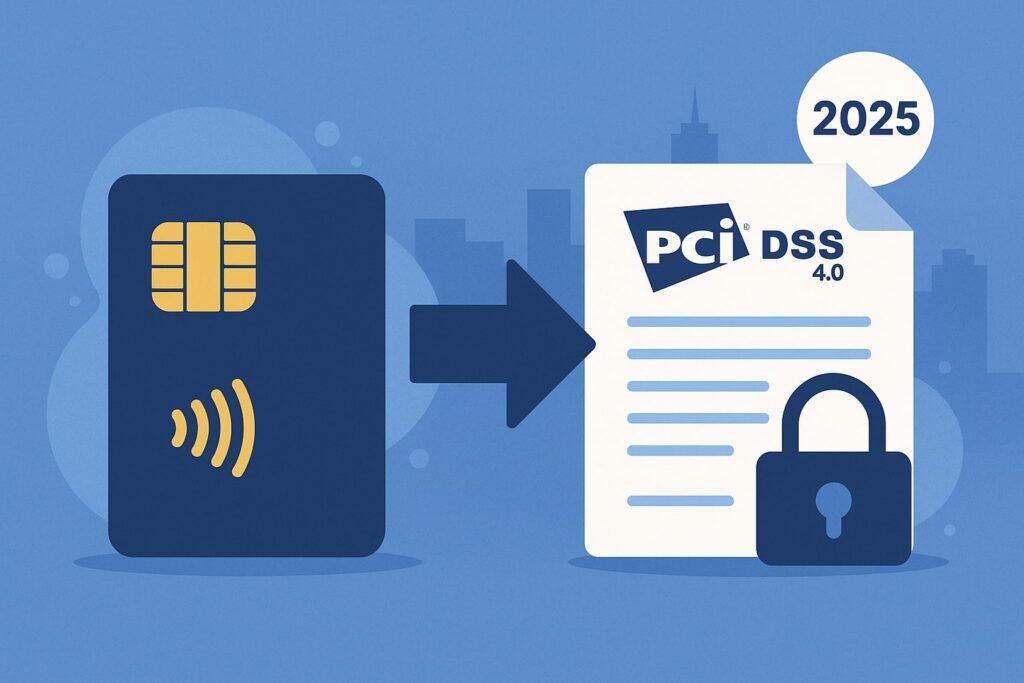
EMV and PCI DSS solve different problems but reinforce each other. EMV is the card-present transaction standard that prevents counterfeit card usage by relying on dynamic chip cryptograms—think “how the card and terminal talk safely.”
PCI DSS is the broader security framework governing how you store, process, and transmit cardholder data—think “how your business protects card data and payment systems.” You need both: EMV to secure each in-person transaction, and PCI to secure your environment, network, and processes end-to-end.
With PCI DSS v4.0, requirements became active in 2024, and many “best practices” became mandatory after March 31, 2025. Practically, that means strengthening authentication, refining risk analysis, tightening vendor oversight, and documenting operational security.
If you update terminals and gateways for EMV at the same time you close PCI gaps, you’ll minimize rework and testing. The alignment is strategic: EMV reduces counterfeit card fraud at the counter; PCI reduces data exposure that fuels card testing and downstream fraud. Treat them as one modernization program.
For Nashville teams, combine efforts: upgrade to EMV contact/contactless terminals, enforce chip/tap usage, segment networks for POS, rotate device passwords, and refresh policies. By the 2025 PCI deadline, you’ll be in stronger shape and less likely to suffer costly disputes or a data incident that invites assessments and reputational harm.
Contact, contactless, and mobile wallets under EMV
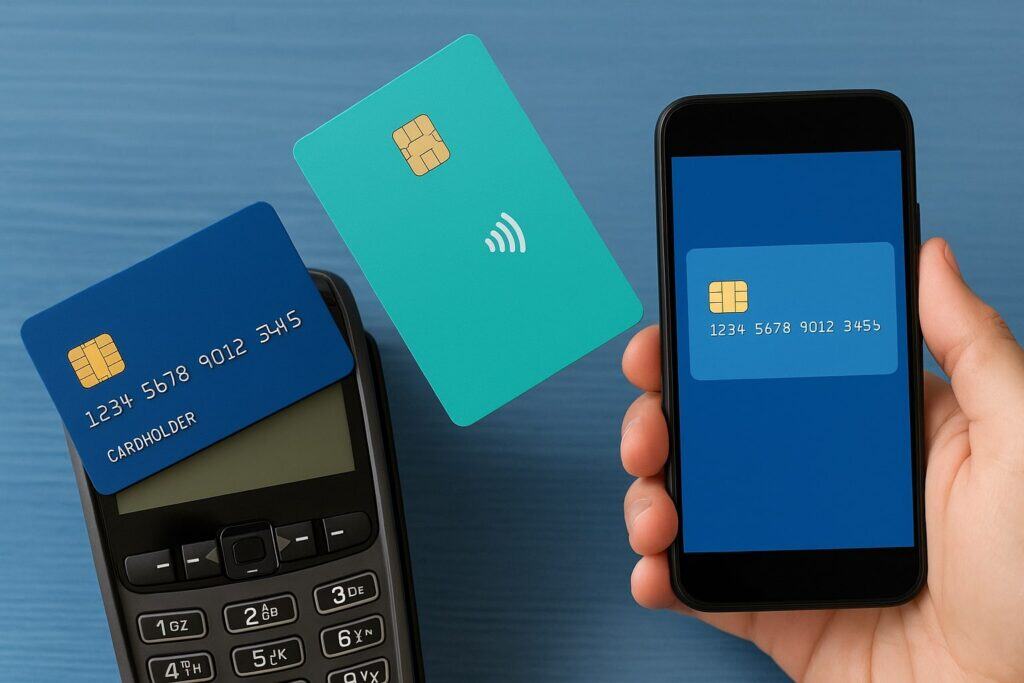
EMV has two big modes at the counter: contact (insert) and contactless (tap/NFC). Both use EMV cryptography to authenticate cards and wallets, but contactless adds speed and supports phones and wearables.
EMVCo maintains the specifications for both, including shared architectures and kernels that let your terminal process taps from chip cards and device wallets. That’s why you can accept Apple Pay, Google Pay, and contactless cards on the same reader with consistent security logic.
For 2025 and beyond, EMVCo has been standardizing a single contactless kernel approach to simplify development and acceptance, making future upgrades smoother for acquirers and merchants.
From a Nashville operations standpoint, make “tap or insert” the default. If a card has a chip, never swipe unless the terminal instructs you after a failed chip read.
For high-throughput environments—coffee bars near Vanderbilt, bars on Broadway, event merch lines—contactless shines by keeping queues moving and reducing card handling. It’s also a cleaner, lower-friction experience for staff and guests.
And because EMV contactless uses dynamic credentials, it’s not vulnerable in the same ways magstripe is. (No standard prevents all fraud; remote/e-commerce fraud is a different animal.)
If you handle international travelers during peak tourism or events, keep terminals updated. Some legacy contactless implementations reported currency-handling quirks a decade ago; today, modern EMV kernels and acquirer settings mitigate those edge cases. Staying current on firmware and parameters helps ensure smooth, secure taps from visitors’ cards and devices.
A practical EMV compliance checklist for Nashville businesses
1) Confirm terminal capabilities and certification: Ensure your POS terminals are EMV-capable for contact and contactless and certified with your acquirer. Ask for current EMVCo Level 1/2 and relevant contactless kernel support. If you’re on a mobile setup (pop-ups, market booths), verify your Bluetooth or handheld readers also carry up-to-date EMV approvals.
2) Enforce chip/tap as policy: Train staff to prompt “please tap or insert.” Only swipe when the terminal instructs after a genuine chip failure. This policy is core to leveraging EMV protections in disputes. Post small prompts at the counter so customers know what to do.
3) Keep firmware and parameters current: Schedule updates for EMV kernels, contactless parameters, card network AIDs, and risk settings. These updates improve interoperability and can close corner-case bugs that lead to fallbacks or declines. Work with your provider so updates don’t hit during peak hours.
4) Pair EMV with PCI basics: Segment POS networks, change default passwords, enable MFA on your payment dashboards, and review logs. PCI DSS v4.0 pushes stronger governance—document who does what and when, then test it. Align your PCI remediation timeline to the March 31, 2025 milestone.
5) Test chip and tap in live conditions: Run small-dollar transactions using common card brands and mobile wallets. Test partial approvals, tips, refunds, reversals, and offline scenarios (if supported) to ensure staff handles edge cases correctly.
6) Update dispute playbooks: When a chargeback arrives, chip/tap evidence improves your position. Make sure receipts reflect chip or contactless usage, and that you can retrieve EMV data elements if your acquirer requests them during representation.
7) Plan for contactless growth: Nashville’s visitor traffic and local adoption make tap a must. Enable NFC across all lanes and portable readers, not just a single counter. Incorporate signage that normalizes tapping to reduce line friction.
EMV for specialized Nashville verticals
- Hospitality & nightlife: High-volume bars, music venues, and late-night restaurants on Broadway and in Midtown benefit most from contactless. Portable EMV readers at the table or bar keep cards in customers’ hands and reduce skimming risk. Train runners to default to tap for tabs and quick closes.
- Healthcare & professional services: Clinics, dental practices, and wellness studios often take card-present copays and balances. EMV at front desk kiosks and mobile readers in treatment rooms speeds checkout while reducing counterfeit card exposure. Pair EMV with PCI controls for stored cards in your practice management system.
- Events & pop-ups: From festivals at Centennial Park to vendor stalls in 12 South, mobility matters. Choose EMV-certified Bluetooth or all-in-one handhelds that accept chip and tap reliably over spotty connections. Download offline parameters only if your acquirer allows and your risk model fits.
- Fuel & convenience: For operators with forecourts in Greater Nashville, April 2021 pump liability shift already applies. If any pumps still aren’t EMV, escalate upgrades; every non-chip transaction at the dispenser can carry “least secure party” risk in a dispute.
Common EMV mistakes—and how to fix them fast
- Swiping chip cards “to make it go through:” This undercuts EMV protections. Fix by retraining staff and configuring terminals to strongly discourage fallback except after genuine chip failure.
- Outdated firmware or kernels: Stale software causes weird declines and currency issues with international cards. Fix by scheduling quarterly updates with your provider and verifying versions in your POS dashboard. EMVCo’s evolving contactless kernel guidance is a reminder to stay current.
- Single-lane NFC: Offering tap on only one device creates bottlenecks and trains customers to hand over cards elsewhere. Fix by deploying contactless across all lanes and handhelds.
- Ignoring PCI because “we use EMV:” EMV secures the transaction; PCI secures your environment. Fix by mapping your cardholder data flows, applying MFA, and aligning with PCI DSS v4.0 timelines.
- No dispute documentation: If you can’t prove tap/insert, you weaken your case. Fix by ensuring receipts capture EMV indicators and staff saves required logs for your acquirer.
Implementation timeline and budgeting tips for SMBs
Start with an asset inventory: list every terminal, reader, and POS software version in use—on counters, at tables, and in the field. Prioritize non-EMV devices for replacement first, then bring older EMV terminals current with firmware.
In most Nashville SMB environments, a staged rollout across two to four weeks works: week 1 planning, week 2 pilot at low-risk registers, week 3 full rollout, week 4 training cleanup and parameter tuning.
Budget categories include hardware (EMV/NFC terminals or handhelds), software licenses or POS app updates, installation and training time, and a modest contingency for accessories (cables, stands, charging bases).
Consider opportunity cost: one prevented counterfeit incident or avoided chargeback can offset a big chunk of your investment. Also account for PCI DSS v4.0 tasks—MFA enablement, policy updates, and network tweaks—so you’re not paying twice for overlapping work as March 31, 2025 draws near.
Finally, set a maintenance cadence: quarterly EMV and contactless parameter checks, biannual terminal health reviews, and annual policy refresh. Put updates on a calendar so they don’t collide with downtown events, Titans home games, or busy holiday weekends.
Working with your acquirer, ISO, or merchant services provider
Your provider is your multiplier. Ask them for a current EMV certification summary (contact and contactless), a device roadmap, and a playbook for dispute evidence that includes EMV data.
Have them schedule firmware pushes during off-hours and confirm you’ll get release notes in advance. If you have multiple locations around Nashville—Gulch, East, Franklin—standardize on a single hardware family to simplify spares and training.
Press for PCI alignment, too. Request a v4.0 readiness checklist, MFA guidance for your payment portals, and network segmentation recommendations that fit your size.
A provider that understands EMV compliance for Nashville businesses should help you blend chip/tap modernization with PCI deadlines, so you’re not running two separate projects with conflicting timelines.
Future trends: modern contactless kernels, tap-to-pay, tokenization
EMVCo’s push toward a unified, licensable contactless kernel is an important behind-the-scenes upgrade. It reduces complexity for terminal makers and acquirers, which should translate into smoother tap acceptance and fewer oddball declines for merchants over time.
Expect firmware updates in the coming years that refine contactless behavior while preserving backward compatibility.
On the merchant side, tap-to-pay on smartphones continues to expand. While acceptance policies depend on your provider and device OS, the long-term trend is clear: secure, EMV-grade taps without extra hardware.
Combine that with network tokenization and dynamic EMV cryptograms, and you have powerful tools against counterfeit and card-present misuse—while keeping checkout quick for Nashvillians and visitors alike. Keep an eye on vendor updates and EMVCo bulletins to stay ahead.
Frequently asked questions (FAQs)
Q.1: What is the difference between EMV and PCI—and do I need both?
Answer: EMV is the transaction technology that authenticates cards via chip or tap to defeat counterfeit clones at the point of sale. PCI DSS is the security standard that governs how your business protects card data across systems, networks, and processes.
You need both: EMV to secure each in-person transaction, and PCI to secure the broader environment and meet industry requirements. With PCI DSS v4.0 “best practices” becoming mandatory after March 31, 2025, now is the time to handle both programs in one plan. That way, you modernize hardware and tighten processes without duplicating effort or cost.
Q.2: If I accept chip and tap, can I still be liable for fraud?
Answer: Yes—EMV reduces counterfeit risk and shifts liability favorably, but it isn’t a magic shield. If a transaction falls back to magstripe, or if policies aren’t followed, you may still be the “least secure party.” Some networks also treat lost/stolen differently.
Always default to chip or tap, keep firmware updated, and follow your acquirer’s procedures to preserve your dispute rights. For pay-at-pump, the April 2021 shift means non-EMV pumps create significant exposure.
Q.3: Do I have to enable contactless, or is chip insert enough?
Answer: Contactless is strongly recommended. EMV contactless uses similar cryptographic protections while speeding lines and enabling mobile wallets. For Nashville’s busy venues and retail corridors, tap acceptance improves throughput and guest satisfaction.
EMVCo continues to evolve contactless kernels for smoother, more consistent acceptance—so enabling NFC today positions you well for future updates.
Q.4: My staff sometimes swipes chip cards to “help” customers. Is that a problem?
Answer: It’s a big problem. Swiping a chip card on a non-EMV path often puts you on the wrong side of the liability shift and can cost you in disputes. Train staff say, “Please tap or insert your card.”
Only swipe if the terminal explicitly instructs after a genuine chip malfunction. Reinforce this with quick huddles and small counter signs so guests know what to do.
Q.5: How does EMV affect e-commerce fraud?
Answer: EMV is aimed at card-present transactions. It doesn’t stop online fraud by itself. In fact, when countries adopt EMV, fraudsters tend to shift to e-commerce.
To protect online sales, use EMV 3-D Secure, address verification, device intelligence, and tokenization. If you operate both in-person and online, run a blended fraud strategy tailored to each channel.
Q.6: What should my 2025 timeline look like?
Answer: Inventory devices now, prioritize any non-EMV hardware for replacement, plan firmware and parameter updates, and align staff training within a 2–4 week rollout.
In parallel, tackle PCI DSS v4.0 actions—MFA, documentation, segmentation—so you’re aligned well before the March 31, 2025 deadline. Bake in quarterly EMV maintenance and annual policy refreshes so you stay current.
Conclusion
EMV compliance for Nashville businesses isn’t just a checkbox. It’s a practical way to prevent counterfeit fraud, shift liability in your favor, and deliver the fast, modern checkout customers expect.
In 2025, the smartest path is simple: choose certified EMV contact + contactless terminals, enforce “tap or insert” usage, keep firmware current, and align those steps with your PCI DSS v4.0 readiness.
Do that, and you’ll reduce avoidable chargebacks, accelerate lines during peak tourist and event surges, and protect your brand in a city where word travels fast.
If you need help turning this into a concrete rollout—device selection, update scheduling, staff scripts, and a PCI v4.0 punch list—I can draft a customized, Nashville-specific plan for your business type and locations.